NOT
EVERYONE PREFER ASSISI,
of Carla Gambacorta
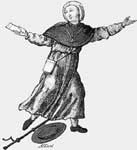
At the end of the 1500's, thanks to the Counter-Reformist reassertion of the cult of Mary and Rome, in opposition to the Protestantism that undermined the theological value of Mary and the supremacy of Rome, a new type of pilgrimage to Santiago di Compostela emerged. This pilgrimage was extended to include as many places of worship as possible along the way to Galicia. That is, one journeys to Santiago but not necessarily taking the shortest route. Once on the way one journeys to Rome, Assisi, Loreto ect... What were the impressions of the 1700's pilgrim, Nicola Albani, born in Melfi who left Naples on 11 June, 1743 and arrived at Assisi on 7 July of the same year? We citizens of Assisi, used to praise and glory may perhaps be surprised or saddened. The young 28 year old Albani, wearing pilgrim clothes and spurred by a great religious motivation as well as the curiosity and desire to travel, crossed into Umbria via the Flaminia. Once passed Spoleto, "a town endowed with a perfect atmosphere" and guest at Foligno, Albani takes up his journey again to "see the marvels of the miracles of Saint Francis of Assisi". He reached Assisi and "his venerable Church where" he narrates "I had Confession and Communion to fulfil my obligation and to receive a great number of Indulgences" and he says he received "the Communion certificate with a small cord which had been blessed for devotion", - and was disillusioned. He had a bitter surprise when he visited the relics, of course a significant devotional custom. Francis' corpse "lies under the High altar, and no-one can see it" since "the keys to the Sepulchre are kept in Rome" and "they say that the Saint does not want to be seen by anyone". Furthermore, the Basilica of St. Francis, even if "very old" does not have "great riches and grandeur, and actually is a little dark and damp because it is made of marble" and the town, he comments is "situated in a terrible position on a hill of a mountain." Therefore, "not having anything more to do in Assisi" since many tourists in that period (not too differently from nowadays) visited the Basilica and then left, Nicola took up his journey again. Hence, without any praise or glory. However our pilgrim's disillusion was compensated by the gratification received on visiting the "Convent of the Madonna of the Angels" located in "a solitary but beautiful spot", where thanks to the warm welcome of the " very courteous sacristan", Albani could have information on "the construction of the building ... see the image of the Virgin Mary that not everyone could see ... painted by San Luca ... and treasured in great gold and silver ware" but above all to personally admire Franciscan relics perserved in the convent, "a miraculous Cross..., a large piece of wood, which was used by the Saint (Francis) to build the pulpit when he had to pray to the Senate of Rome..., a small garden, where the Saint lay to repent, where he would throw himself without clothes onto the thorns... now they have become rose bushes without thorns, a miraculous thing... and there is always a great fragrance of the sweet odour of Paradise" and furthermore, other Fransican relics like "the Saint's holy entrails in a crystal vase". Wherever Albani visited there were "great Indulgences to earn", and "in the first week of August there is the everlasting pardon for all sins". Therefore welcomed "quite comfortably" in the convent's guest rooms and having received some charity" Nicola Albani returned to Foligno, a 1700's town "with beautiful buildings, paper making and a good quantity of sugared almonds, that it had many sugared streets" and he continued his journey across "the steep Colle fiorito, that is the boundary between Umbria and the Marche" directed towards Santiago arriving there on 25 November.